Upright vs Grand Piano: Which Hailun Piano Should You Choose?
When choosing an acoustic piano, one of the first questions many buyers ask is whether they should choose an upright piano or a grand piano.
Both can provide an excellent playing experience, but they are designed differently and suit different spaces, playing styles and budgets. A grand piano is often associated with professional performance and expressive playing, while an upright piano is generally more practical for homes, studios and teaching environments.
For anyone considering a Hailun piano, understanding these differences can make it easier to choose an instrument that suits your needs.
What Is the Difference Between an Upright and Grand Piano?
The most obvious difference is the way the piano is constructed.
In an upright piano, the strings and soundboard are arranged vertically. This allows the piano to produce a full acoustic sound while taking up considerably less floor space.
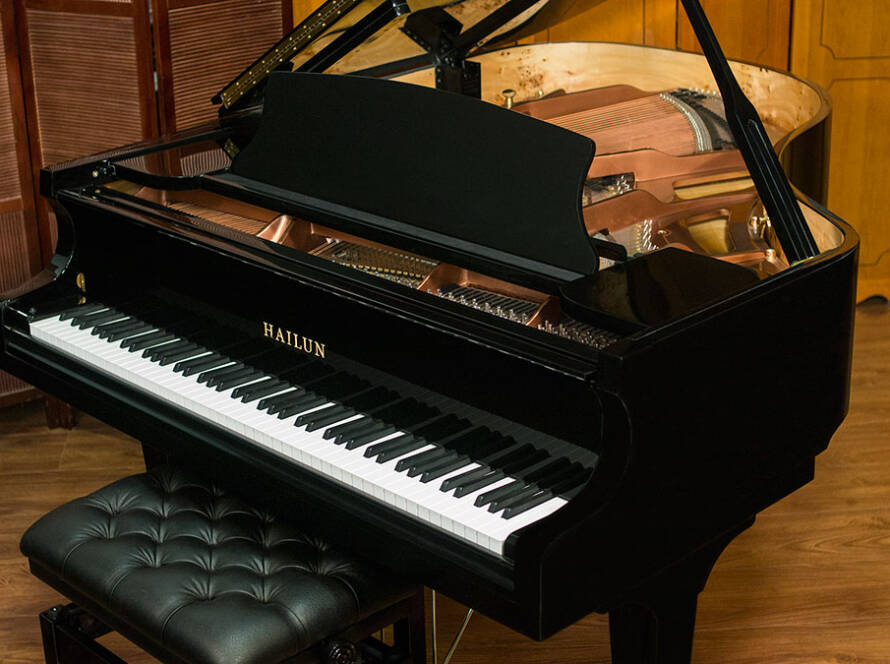
A grand piano has a horizontal design, with its strings and soundboard extending across the length of the instrument. Its action also works differently from that of an upright.
These differences in construction can affect the way the piano responds, particularly when playing repeated notes, fast passages and changes in dynamics.
Upright Piano: Practical and Space-Friendly
For many homes, an upright piano is the most practical choice.
An upright can provide a rich acoustic piano sound without requiring the floor space of a grand. This makes it suitable for living rooms, music studios, classrooms and teaching spaces.
Its vertical design also makes placement easier, as an upright can generally be positioned against a suitable wall.
However, upright pianos are not only for beginners. A well-designed and properly maintained upright can provide a responsive keyboard and satisfying tone for students, teachers and experienced players.
For many families, the combination of sound, size and practicality makes an upright Hailun piano a sensible choice.
Grand Piano: More Room for Expression
A grand piano offers a different playing experience.
Because of its horizontal design, a grand piano can have longer strings and a larger sound-producing structure, depending on its size. Its action also responds differently from that of an upright.
Players may notice the difference when playing repeated notes, rapid passages and subtle changes in dynamics. A grand can also provide strong projection and tonal depth, which can be valuable for advanced players, performances and musicians who want greater expressive control.
However, bigger does not automatically mean better.
A grand piano requires considerably more floor space, and the room itself needs to be suitable for the instrument. A very large piano may not be the best choice for a small room if the sound becomes overwhelming.
Hailun HS-121 vs Hailun 150-SE
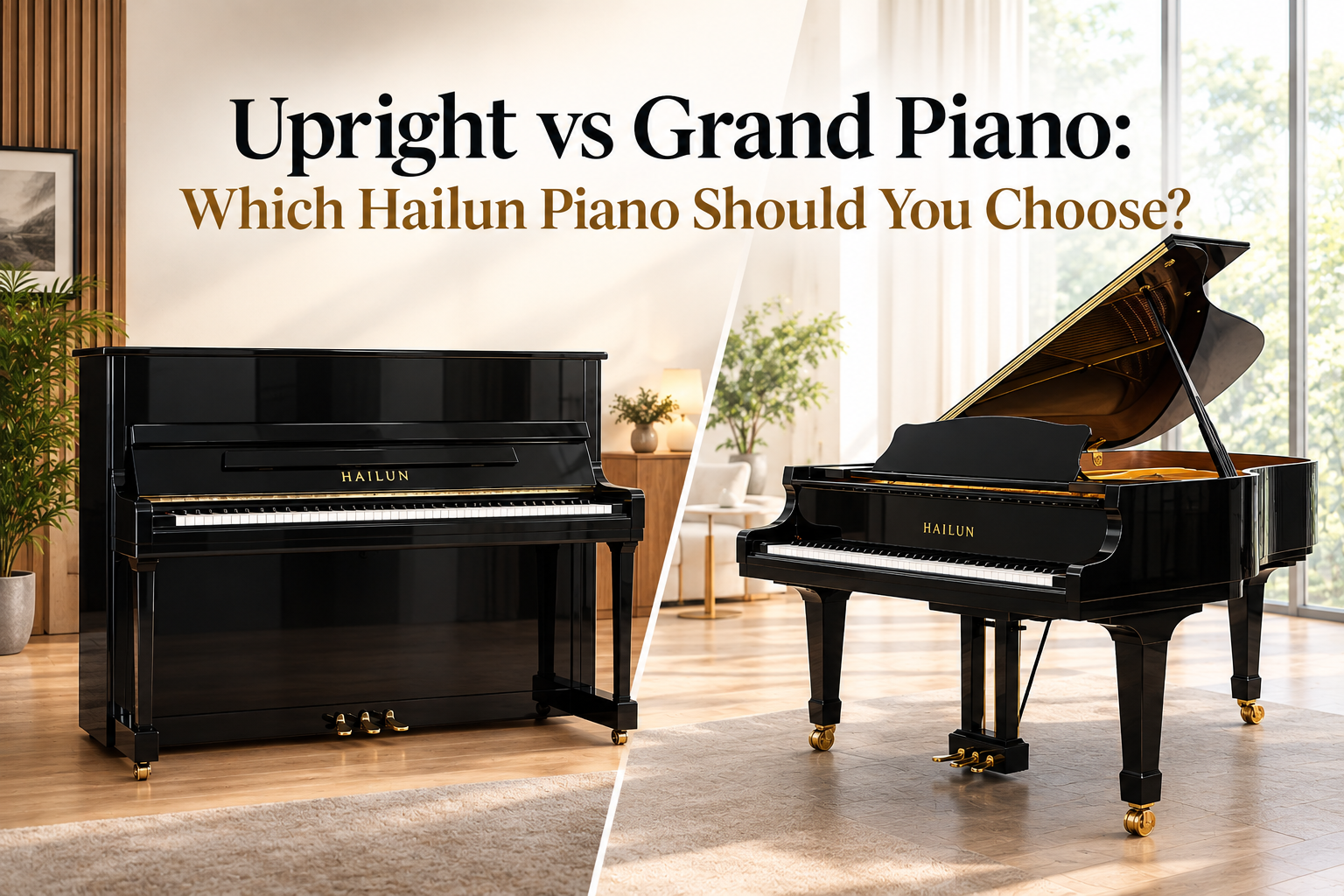
The difference between an upright and a grand can be illustrated with two Hailun piano models: the Hailun HS-121 and Hailun 150-SE.
The HS-121 is a 121 cm upright piano, making it a practical option for home practice and developing players. Its compact upright design makes it easier to accommodate where floor space is limited, while features such as a spruce soundboard and Röslau strings contribute to its acoustic performance.
The 150-SE, meanwhile, is a 153 cm grand piano from Hailun’s Professional Teaching range. Its larger grand piano construction provides a different playing experience, with the horizontal action offering the characteristic response of a grand piano.
The difference is therefore not simply about size.
The HS-121 focuses on practicality and efficient use of space, while the 150-SE offers the playing characteristics and physical presence of a grand piano.
For someone with limited space who mainly needs a piano for regular practice, the HS-121 may be a practical choice. For a serious pianist, teacher or performer with sufficient room and budget, the 150-SE can provide the advantages of a grand piano in a relatively compact size.
Sound and Tone
Sound is another important consideration when choosing a Hailun piano.
Both upright and grand pianos can produce beautiful tones, but their construction influences how sound is produced and projected.
A grand piano’s horizontal soundboard and longer strings can contribute to an open, projecting sound and give the pianist greater room to shape dynamics and tone.
An upright piano can also offer a rich and balanced sound, particularly when it is well designed, properly voiced and regularly maintained.
It is therefore important not to judge a piano simply by its category. A good upright may be a better choice for a particular player than a grand that does not suit their preferences or room.
Personal taste, room acoustics, piano condition and voicing all influence the final sound.
Touch and Playing Experience
Touch is another important difference.
The action of a grand piano is designed differently from that of an upright. This can provide a particularly responsive feeling during repeated notes and fast passages, which can become more noticeable for advanced players.
However, a good upright should still offer a consistent and responsive keyboard. For students and everyday players, a well-regulated upright can provide everything they need to develop proper technique.
The best way to understand the difference is to play both types of piano whenever possible.
Space, Budget and Maintenance
Space is one of the biggest practical differences.
An upright generally requires much less floor space, making it easier to accommodate in an average home. A grand needs more room around the instrument, including space for the bench and the movement of the lid.
Budget is another consideration. Grand pianos generally require a larger investment, although prices vary depending on brand, model, size, age and condition.
Both upright and grand pianos also require regular tuning and may need regulation and voicing over time. Choosing a piano that suits your environment and maintenance expectations is therefore just as important as considering its price.
Which Hailun Piano Should You Choose?
The Hailun piano HS-121 may be the better choice if you:
- Have limited space
- Are buying a piano for home practice
- Are a beginner or developing student
- Need a practical instrument for teaching
- Want an acoustic piano with a smaller footprint
The Hailun piano 150-SE may be more suitable if you:
- Have sufficient space
- Are an advanced or professional pianist
- Regularly perform or teach at a high level
- Want the distinctive touch and response of a grand action
- Prefer greater projection and expressive control
Final Thoughts
So, upright vs grand piano: which Hailun piano should you choose?
There is no single answer.
The HS-121 offers the practicality of an upright, making it easier to accommodate in a home or smaller studio. The 150-SE provides the playing experience and design of a grand piano, making it a compelling option for players who have the space and want the characteristics of a grand.
Ultimately, the best Hailun piano is the one that fits your playing level, available space, musical goals and budget.
Rather than choosing simply because a piano is larger or more expensive, take the time to play different instruments and listen carefully. The right piano should feel comfortable, responsive and inspiring to play.