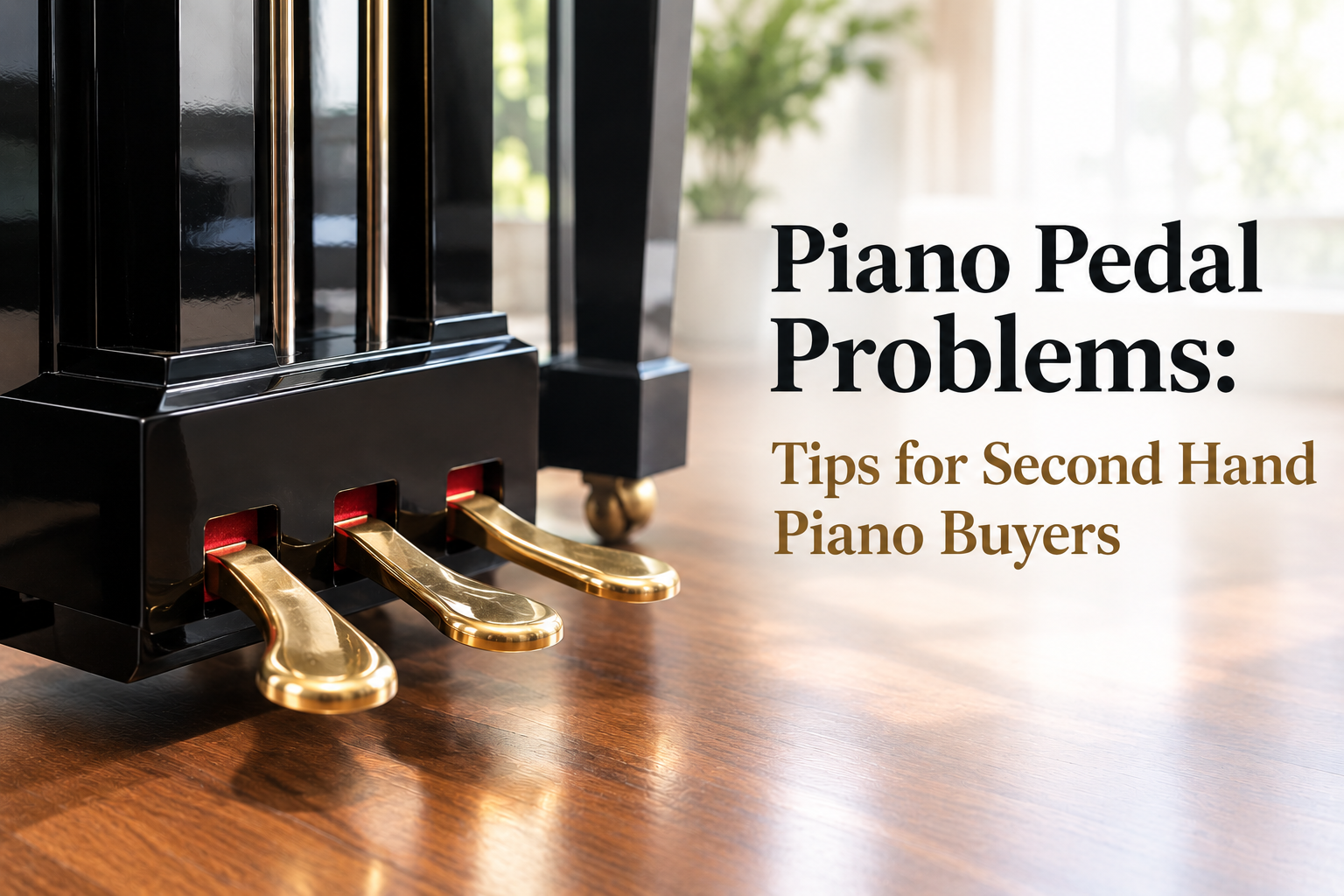
Piano Pedal Problems: Tips for Second Hand Piano Buyers
When buying a second hand piano in Malaysia, most buyers naturally focus on the cabinet, keys and overall appearance. However, there is another important part of the instrument that should not be overlooked: the pedals.
Piano pedals may look simple, but they are connected to the piano’s internal mechanism and play an important role in controlling sustain, tone and playing expression. A pedal that feels unusually stiff, loose or noisy may simply need adjustment, but it can sometimes indicate wear or a need for servicing.
Whether you are considering a second hand upright piano or a used grand piano in Malaysia, checking the pedals can give you useful information about the instrument’s overall condition.
What Do the Piano Pedals Do?
Most modern acoustic pianos have two or three pedals, depending on the model.
The sustain pedal, usually located on the right, is the most frequently used. It allows notes to continue sounding after the keys are released, creating a fuller and more connected sound.
The soft pedal, normally on the left, changes the way the piano produces sound, giving the player greater control over softer passages.
Some pianos also have a middle pedal, often a sostenuto pedal on grand pianos or a practice/muffler pedal on some upright pianos. Its function depends on the design of the instrument.
Because each pedal has a mechanical function, its condition should be checked when evaluating a second hand piano.
Common Piano Pedal Problems
1. Squeaking or Creaking
A squeaking pedal is one of the most common problems found on older or heavily used pianos. Dust, friction between moving parts or normal wear can cause noise when the pedal is pressed or released.
A small amount of noise does not necessarily mean there is a serious problem. However, persistent or loud squeaking should be inspected by a piano technician. You can add candle wax or carbon powder to lubricate the pedal hinge. Best to ask for a piano technician’s assist.
2. Loose or Wobbly Pedals
A pedal should feel secure when you use it. If it moves from side to side or feels unusually loose, there may be wear in the pedal mechanism or connecting components.
When inspecting a second hand piano, gently press each pedal several times and pay attention to whether the movement feels controlled and consistent.
3. Stiff Pedals
A pedal that requires significantly more pressure than expected may have friction or adjustment issues. In some cases, environmental conditions and changes in humidity can also affect wooden and felt components within a piano.
This is particularly relevant in Malaysia, where warm and humid conditions can influence wooden and mechanical parts over time.
4. Pedal Does Not Return Properly
After releasing a pedal, it should return smoothly to its normal position. If it remains partially depressed, returns slowly or feels inconsistent, the mechanism may require adjustment or servicing.
This is particularly important with the sustain pedal because incomplete release can affect the way notes stop sounding.
5. Clicking or Knocking Sounds
A clicking or knocking sound when a pedal is operated can be caused by movement between mechanical parts, worn materials or loose connections.
Again, the sound itself does not automatically mean there is a major fault. The important thing is to have the source identified before purchasing the instrument.
What Can Cause Piano Pedal Problems?
Piano pedals are used repeatedly throughout the life of an instrument, so some wear is normal.
Common causes include:
- Regular use over many years
- Dust and dirt around moving components
- Worn felt or other small mechanical parts
- Loose connections
- Changes in temperature and humidity
- Lack of regular servicing
- Incorrect previous adjustments
For a second hand piano, the amount of use and quality of previous maintenance can be just as important as the piano’s age.
A well-maintained older piano may have pedals that operate smoothly, while a newer instrument that has been heavily used or poorly maintained may require attention.
How to Check Piano Pedals Before Buying a Second Hand Piano
Testing the pedals only takes a few minutes and can be included as part of your overall piano inspection.
Start by pressing each pedal slowly several times. Listen for unusual noises and notice how much resistance you feel.
The pedal should move smoothly rather than suddenly becoming stiff or loose. Release it and check that it returns properly.
For the sustain pedal, play several notes or chords while pressing the pedal. Release the keys while keeping the pedal down, then release the pedal. The notes should respond as expected without obvious delay or mechanical problems.
Don’t just test the pedals once. Try them several times while playing different parts of the keyboard. This can give you a better sense of whether the pedal feels consistent.
Should a Pedal Problem Stop You Buying the Piano?
Not necessarily.
A squeaky or slightly loose pedal does not automatically make a second hand piano a poor purchase. Some pedal problems can be relatively straightforward to correct during routine servicing.
However, pedal problems should be considered together with the condition of the rest of the piano.
Look at the keys, action, hammers, strings, soundboard, bridges, tuning stability and cabinet as well. If several areas show signs of neglect, the piano may require more extensive servicing after purchase.
For a more valuable or older second hand piano, having a qualified piano technician inspect the instrument before buying can be a worthwhile investment.
Piano Pedal Maintenance
Once you purchase a second hand piano, regular maintenance can help keep the pedals working smoothly.
Keep the area around the pedals clean and avoid allowing dust and dirt to build up underneath the piano. Do not apply household oil, lubricant or cleaning products to the pedal mechanism unless recommended by a qualified technician.
During regular piano servicing, ask the technician to check the pedal operation as well as the tuning and action.
For owners of second hand piano in Malaysia, maintaining a stable indoor environment is also helpful. Avoid placing the piano directly beside windows, air-conditioning units or areas exposed to significant temperature and humidity changes.
Final Thoughts
Piano pedals may be small compared with the rest of the instrument, but they have an important role in playing expression and overall performance.
When buying a second hand piano in Malaysia, don’t judge the instrument only by its appearance or how clean the cabinet looks. Test the pedals carefully and pay attention to their movement, sound and response.
A minor pedal issue may simply be part of normal maintenance, but it can also provide a useful clue about how well the piano has been cared for.
By checking the pedals alongside the keys, action, strings, soundboard and tuning condition, you can make a more informed decision and choose a second hand piano that is ready to continue making music for years to come.