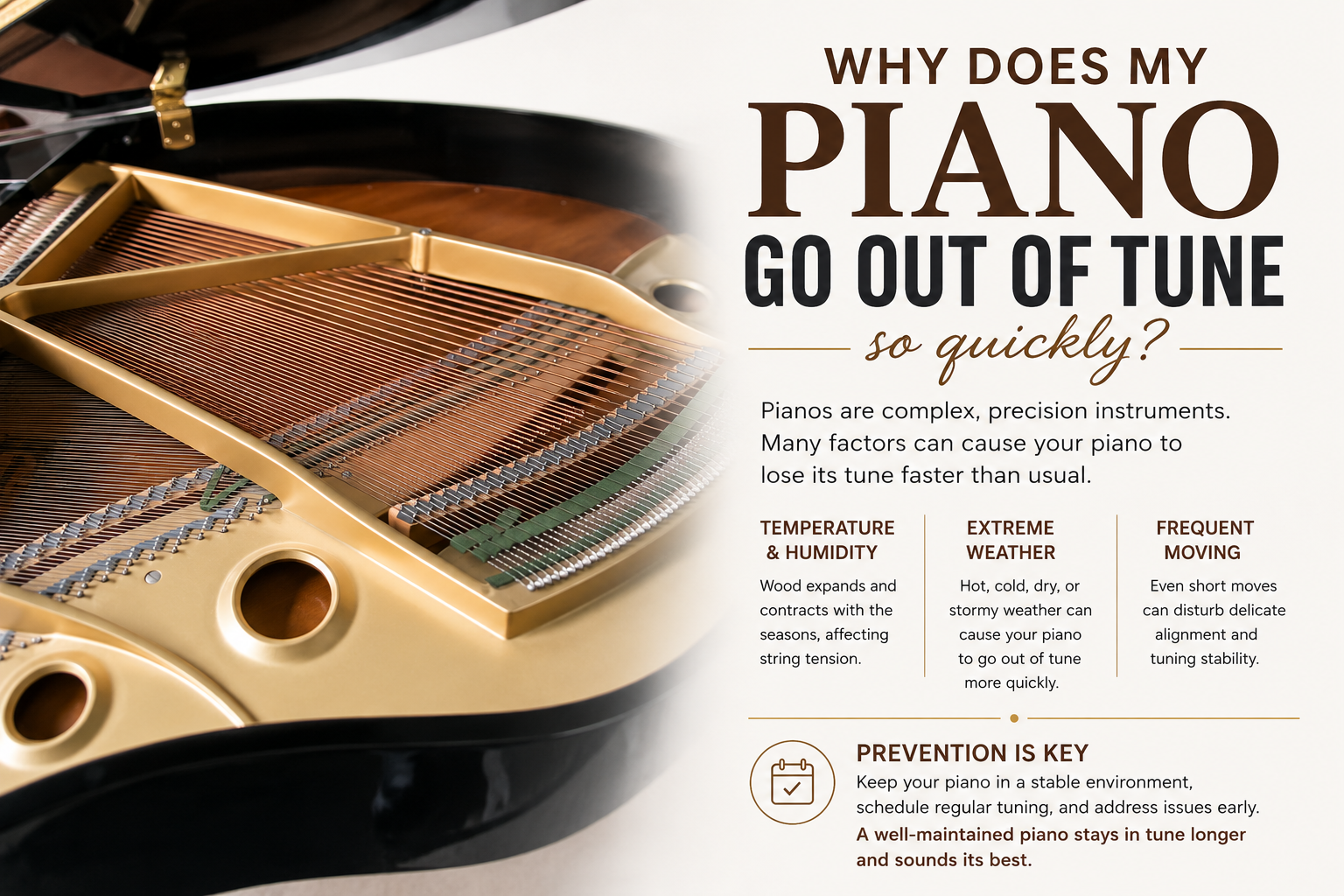
Why Does My Piano Go Out of Tune So Quickly?
If you’ve ever found yourself asking, “Didn’t I just have my piano tuned?” you’re not alone. Many piano owners are surprised when their instrument starts sounding off-key only a few months after a professional tuning. Whether you own a brand-new upright, a family heirloom, or a second hand piano in Malaysia, understanding why your piano goes out of tune can help you protect your investment and enjoy better performance for years to come.
In this article, we’ll explore the most common reasons a piano loses its tuning and what you can do to keep it sounding its best.
1. Malaysia’s Humid Climate is the Biggest Culprit
One of the primary reasons pianos go out of tune so quickly in Malaysia is the country’s tropical climate. High humidity and fluctuating temperatures have a significant impact on the wooden components inside a piano.
The piano’s soundboard, bridges, and pinblock are made from wood, which naturally expands when it absorbs moisture and contracts when it dries. As these parts move, they alter the tension of the strings, causing the pitch to shift.
In Malaysia, where humidity levels often exceed 80%, these changes happen continuously throughout the year. Even if your piano remains untouched, the environment alone can affect its tuning.
How to reduce the impact:
- Keep your piano away from windows and direct sunlight.
- Avoid placing it near air conditioners or areas with frequent temperature changes.
- Use a dehumidifier if your room experiences excessive moisture.
- Consider installing a piano humidity control system for long-term protection.
2. New Strings Take Time to Stabilise
If you’ve recently purchased a brand-new piano or had strings replaced, it’s normal for the instrument to lose its tuning more quickly during the first year.
New piano strings gradually stretch as they settle under approximately 18 to 20 tons of total string tension. This process can take several tunings before the strings become stable.
Professional technicians often recommend tuning a new piano three to four times during its first year before returning to the standard maintenance schedule.
3. Frequent Playing Can Affect Tuning
Every time you press a key, the hammer strikes the string with considerable force. Over thousands of repetitions, especially in schools, music centres, churches, or homes with dedicated pianists, the strings gradually shift.
This is completely normal.
Pianos that receive several hours of practice each day generally require more frequent tuning than instruments played only occasionally.
Concert pianos are often tuned before every performance because even a few hours of intensive playing can slightly alter the tuning.
4. Moving the Piano
Have you recently relocated your piano?
Moving a piano—even across the room—can affect its tuning. Transporting it to a new home is even more significant because the piano experiences:
- Vibrations during transport
- Changes in humidity
- Different room temperatures
- A new flooring and room environment
After moving, it’s recommended to wait around two to four weeks before scheduling a tuning. This allows the piano to acclimatise to its new surroundings.
This advice is particularly important when purchasing a second hand piano in Malaysia buyers often transport from one location to another.
5. Older Pianos May Struggle to Hold Their Tune
Age itself isn’t always the problem. Many 60-year-old pianos still hold tuning remarkably well.
The real issue is the condition of the piano’s internal components.
If the tuning pins become loose in the pinblock, they can no longer maintain the proper tension on the strings. As a result, the piano may drift out of tune within weeks, regardless of how well it was tuned.
A qualified piano technician can inspect:
- Tuning pin tightness
- Pinblock condition
- String condition
- Structural integrity of the piano
This is one reason why buying from a reputable dealer is important when looking for a second hand piano in Malaysia shoppers can trust. A professionally inspected and serviced piano will generally stay in tune much longer than one with unknown maintenance history.
6. Seasonal Changes and Air Conditioning
Although Malaysia doesn’t experience four distinct seasons, indoor environments can still create dramatic climate changes.
Many homes and offices run air conditioning throughout the day and switch it off at night. These daily fluctuations in temperature and humidity cause the piano’s wooden structure to expand and contract repeatedly.
If possible, maintain a relatively stable room temperature and avoid exposing the piano to sudden environmental changes.
Can You Prevent a Piano from Going Out of Tune?
The honest answer is no.
Every acoustic piano naturally goes out of tune over time because it contains over 200 strings under enormous tension. However, you can significantly slow the process with proper care.
Here are some best practices:
- Schedule professional tuning every six months.
- Keep humidity levels as stable as possible.
- Avoid moving the piano unnecessarily.
- Position it away from direct sunlight, windows, and air-conditioning vents.
- Have regular maintenance inspections to identify issues before they become costly repairs.
Is It Worth Tuning an Older Piano?
Absolutely-provided the piano is structurally sound.
Many older Japanese and European pianos continue to deliver beautiful tone and excellent performance after decades of use. A professional technician can determine whether your piano is capable of holding a stable tuning or whether restoration work is needed.
If you’re considering purchasing a second hand piano in Malaysia, always choose a dealer that offers professional inspection, servicing, and after-sales support. A well-maintained second-hand piano can provide outstanding value while delivering years of reliable musical enjoyment.
Final Thoughts
A piano going out of tune quickly isn’t necessarily a sign that something is wrong. In most cases, it’s simply responding to changes in humidity, temperature, regular playing, or its natural settling process.
The good news is that consistent maintenance and proper environmental care can dramatically improve tuning stability. Whether you own a new piano or a carefully restored second hand piano in Malaysia, regular servicing ensures your instrument continues to sound rich, expressive, and enjoyable every time you sit down to play.
By understanding what causes tuning changes, you’ll not only extend the life of your piano but also enjoy a better playing experience for many years to come.