Protect a Second Hand Piano from Damage
Buying a second hand piano is a smart investment—especially if you want quality sound at a more affordable price. However, unlike brand-new instruments, a pre-owned piano requires extra care to ensure it stays in excellent condition for years to come.
In this guide, you’ll learn practical and effective ways to protect your piano from common types of damage, including humidity, wear and tear, and improper handling.
Why Protection Matters for a Second Hand Piano
A piano has already gone through years of use and environmental exposure. Without proper care, it can quickly deteriorate, leading to:
- Out-of-tune sound
- Cracked wood or soundboard
- Sticky or unresponsive keys
- Rusted strings and internal parts
Proper protection not only preserves sound quality but also extends the lifespan of your piano.
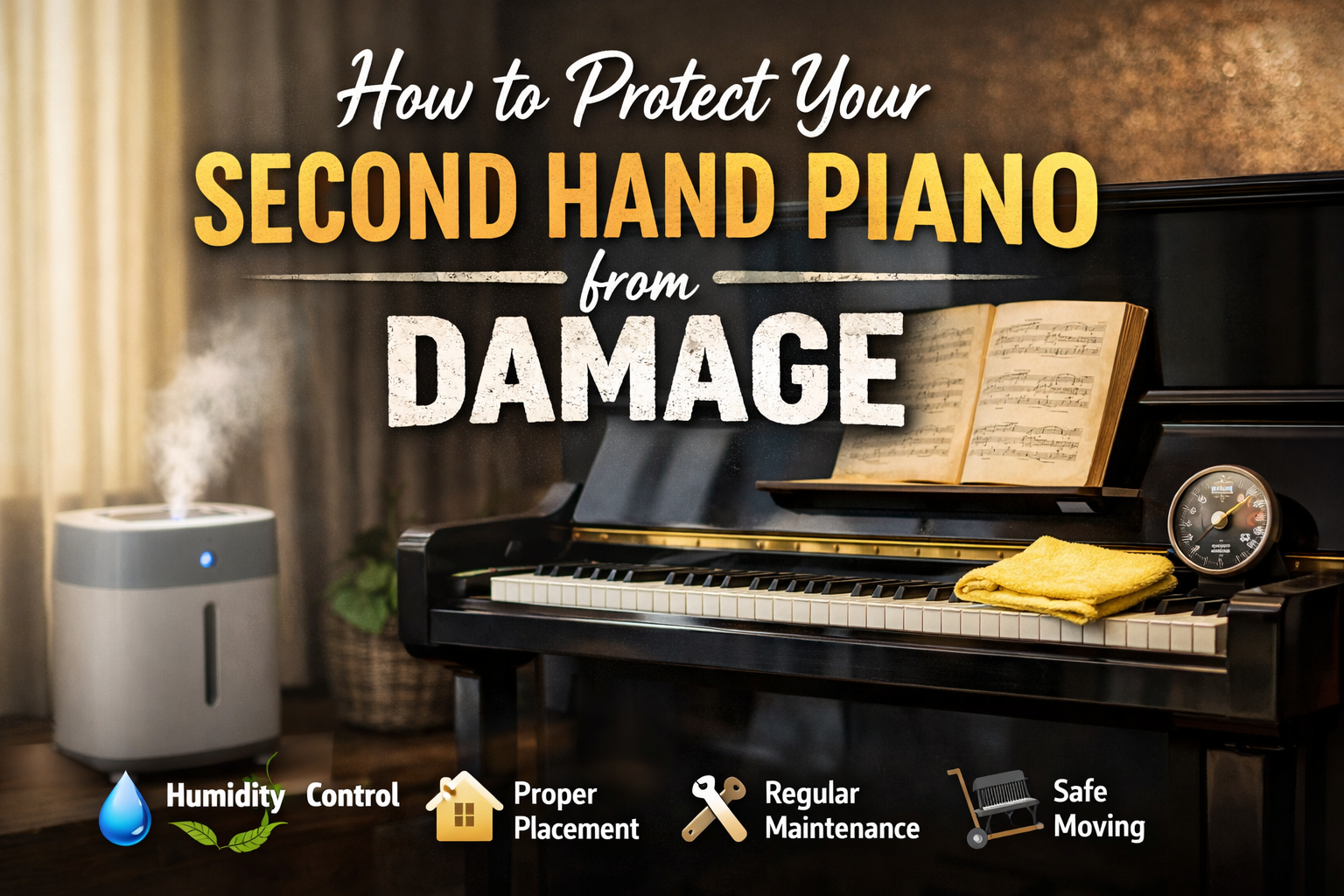
Control Humidity Levels
Humidity is the biggest enemy of any second hand piano, especially in countries like Malaysia with high moisture levels.
Why it matters:
- High humidity causes wood to swell
- Low humidity leads to cracks
- Fluctuations affect tuning stability
What you should do:
- Use a piano dehumidifier rod inside the piano
- Place your piano in a room with stable air circulation
- Consider using a room dehumidifier
Ideal humidity level: 50%–70%
Choose the Right Placement
Where you place your second hand piano plays a huge role in its longevity.
Avoid placing near:
- Windows (sunlight can damage finish and cause extreme heat fluctuation across the day)
- Kitchens or bathrooms (high moisture areas)
Best placement tips:
- Keep it against an interior wall
- Avoid direct sunlight
- Ensure proper ventilation
Clean Your Second Hand Piano Properly
Dust and dirt can build up and affect both appearance and performance.
Safe cleaning tips:
- Use a soft microfiber cloth for the exterior
- Clean keys gently with a slightly damp cloth
- Avoid harsh chemicals or sprays
Tip: Always clean along the direction of the keys to prevent moisture from seeping inside.
Schedule Regular Tuning & Servicing
Even the best-maintained second hand piano will go out of tune over time.
Recommended:
- Tune your piano at least twice a year
- Schedule regular inspections by a technician
- Fix minor issues early before they become costly
Regular servicing ensures your piano maintains its tone quality and playability.
Avoid Heavy Objects on the Second Hand Piano
It may be tempting to use your piano as a decorative surface, but placing heavy items can cause damage.
Risks include:
- Warping the wood
- Affecting internal structure
- Causing scratches
Keep decorations light and minimal.
Protect Against Pests
Older pianos can attract insects like termites or ants, especially if made of natural wood.
Prevention tips:
- Keep the area clean and dry
- Avoid placing food near the piano
- Use anti-pest treatments if necessary
Handle with Care During Moving
Improper moving is one of the fastest ways to damage a second hand piano.
Important tips:
- Always hire professional piano movers
- Never drag or tilt excessively
- Secure internal parts during transport
Close the Lid When Not in Use
Keeping your piano closed helps protect it from:
- Dust accumulation
- Sunlight exposure
- Accidental spills of liquid
This simple habit can significantly extend the life of your second hand piano.
Final Thoughts
Owning a second hand piano is a rewarding experience—but it comes with responsibility. By controlling humidity, placing it correctly, maintaining cleanliness, and scheduling regular servicing, you can keep your piano in excellent condition for many years.
A well-maintained second hand piano doesn’t just save money—it can deliver performance and enjoyment comparable to a new instrument.