How Concert Grand Pianos Are Made
Concert grand pianos are among the most sophisticated musical instruments ever created. Known for their powerful sound, responsive touch, and rich tonal depth, these instruments are carefully crafted using a combination of traditional craftsmanship and modern technology. Brands such as Grotrian Piano are well known for producing high-quality concert grand pianos that are used in concert halls, music schools, and professional performances around the world.
In this article, we will explore how concert grand pianos are made, from raw materials to the final tuning process, and why the craftsmanship behind a Grotrian Piano makes these instruments so special.
Selecting High-Quality Materials
The process of building a concert grand piano begins with selecting the finest materials. Each component of the instrument plays a role in shaping the final sound and performance.
Wood Selection
High-quality wood is essential for building a piano. The most commonly used woods include:
-
Spruce – used for the soundboard because of its excellent resonance
-
Maple – used for structural parts like the rim and bridges
-
Beech or birch – used for internal components and durability
The soundboard, often called the heart of the piano, is especially important. Premium manufacturers like Grotrian carefully select spruce with the right grain pattern to ensure optimal sound projection.
Building the Grotrian Piano Rim
The rim is the outer frame of the grand piano and provides structural strength. It supports the tension of the strings, which can exceed 20 tons of pressure.
To build the rim:
-
Thin layers of hardwood are glued together.
-
The layers are bent into the iconic grand piano shape.
-
The structure is clamped and left to cure.
This process creates a strong yet flexible body that helps shape the instrument’s tonal character. In many Grotrian models, rim construction is done with precision techniques that improve durability and resonance.
Crafting the Soundboard
The soundboard is responsible for amplifying the vibrations produced by the strings.
Once the spruce is selected:
-
The wood is carefully dried for stability
-
It is shaped into a slight curve called the crown
-
Bridges are attached to transfer string vibration
When the strings vibrate, their energy passes through the bridge into the soundboard, which then resonates and produces the rich sound heard in concert halls.
Manufacturers such as Grotrian are known for carefully crafting soundboards to produce balanced tone across the entire keyboard.
Installing the Cast Iron Plate
Concert grand pianos require an extremely strong frame to support string tension. This is where the cast iron plate comes in.
The plate:
-
Supports the tension of the strings
-
Maintains tuning stability
-
Protects the internal structure
The plate is carefully cast, polished, and installed inside the piano before the strings are attached.
High-end instruments like a Grotrian often feature precisely engineered plates to ensure long-term stability and consistent sound quality.
Stringing the Grotrian Piano
Once the plate is installed, the piano is ready for stringing.
Each key is connected to one, two, or three strings depending on the pitch:
-
Bass notes use thicker, longer strings
-
Treble notes use thinner, shorter strings
These strings are stretched tightly across the frame and anchored to tuning pins.
The string arrangement is carefully designed to achieve the correct pitch and harmonic balance. Piano instruments are known for their carefully designed string scaling, which helps produce powerful bass and clear treble tones.
Assembling the Action Mechanism on Grotrian Piano
One of the most complex parts of the piano is the action mechanism, which connects the keys to the hammers that strike the strings.
When a pianist presses a key:
-
The key moves a lever system.
-
The hammer strikes the string.
-
The hammer quickly falls back so the string can vibrate.
A concert grand piano contains thousands of moving parts, and each must be precisely adjusted to ensure smooth response and accurate repetition.
Many Piano models are praised for their responsive action, which allows pianists to control dynamics and expression with precision.
Regulation, Voicing and Tuning
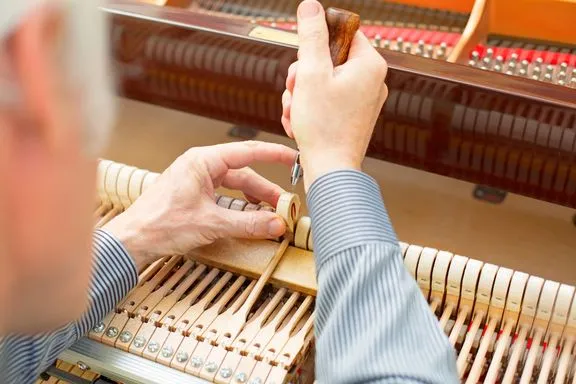
After the piano is fully assembled, technicians perform regulation, voicing and tuning.
Regulation
Regulation of action mechanism gives the piano a smoother touch and higher responsiveness. This ensures that the piano is evenly heavy on all the keys, ensures that the responsiveness is good and even.
Voicing
Voicing adjusts the tone of the piano by shaping and softening the hammer felt. This ensures that the sound is balanced across all keys.
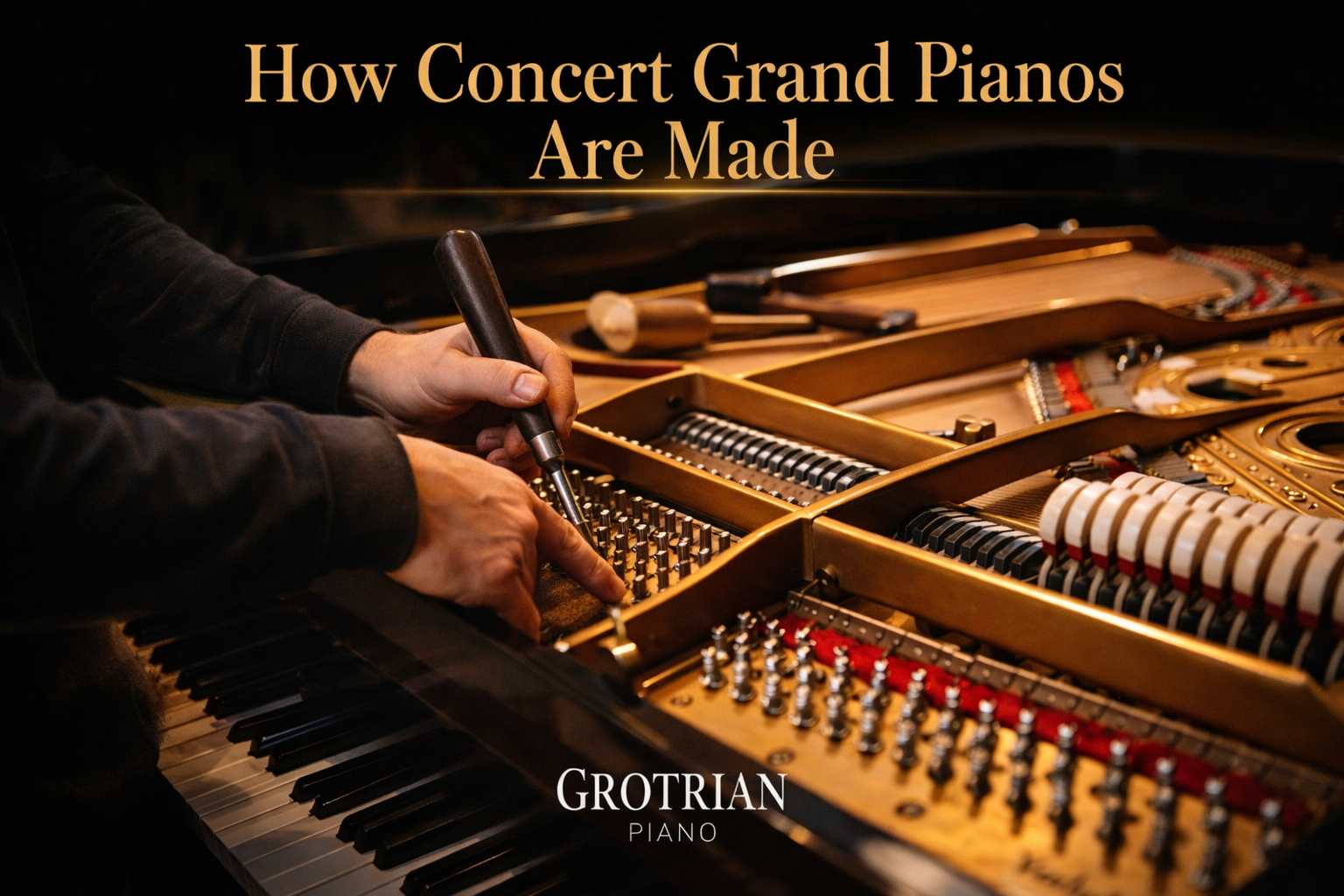
Tuning
The final step is tuning the strings to the correct pitch. Majority of the pianos are tuned at 440hz but there are certain situation that requires the piano to be at 442hz. Because pianos contain over 200 strings, tuning requires careful skill and experience.
Even after leaving the factory, pianos must be tuned regularly to maintain their optimal sound.
Why Craftsmanship Matters
Concert grand pianos are not mass-produced instruments. Each piano requires hundreds of hours of craftsmanship and careful attention to detail.
This is why brands such as Grotrian are respected worldwide. Their instruments combine traditional European craftsmanship with modern engineering to produce concert grand pianos with exceptional tonal clarity and performance.