Piano Tuning vs Piano Regulation: Used Yamaha Piano Owner Should Know
Buying a used Yamaha piano is one of the smartest investments for musicians, families, and music schools. Yamaha has earned a global reputation for exceptional craftsmanship, reliable performance, and long-lasting quality. With proper care, a used Yamaha piano can deliver decades of enjoyable playing while costing significantly less than a new model.
Many owners believe a freshly tuned piano is in perfect condition. Though, piano regulation plays an equally important role by restoring the piano’s touch and responsiveness. Knowing the difference between these two services helps you maintain your used Yamaha piano and enjoy its full performance potential.
Why Maintenance Matters for a Used Yamaha Piano
Yamaha builds its pianos to withstand years of regular playing. Popular models like the Yamaha U1, U3, UX, G2E, and GH1 continue to perform exceptionally well, even after changing owners multiple times.
Every used Yamaha piano has its own story. Some spent years in family homes, while others served in music schools, churches, or teaching studios. No matter where the piano came from, years of playing naturally affect both the strings and the action mechanism.
As a result, two used Yamaha pianos of the same model and age can feel completely different. Regular maintenance keeps the instrument sounding and playing the way Yamaha intended.
What Is Piano Tuning?
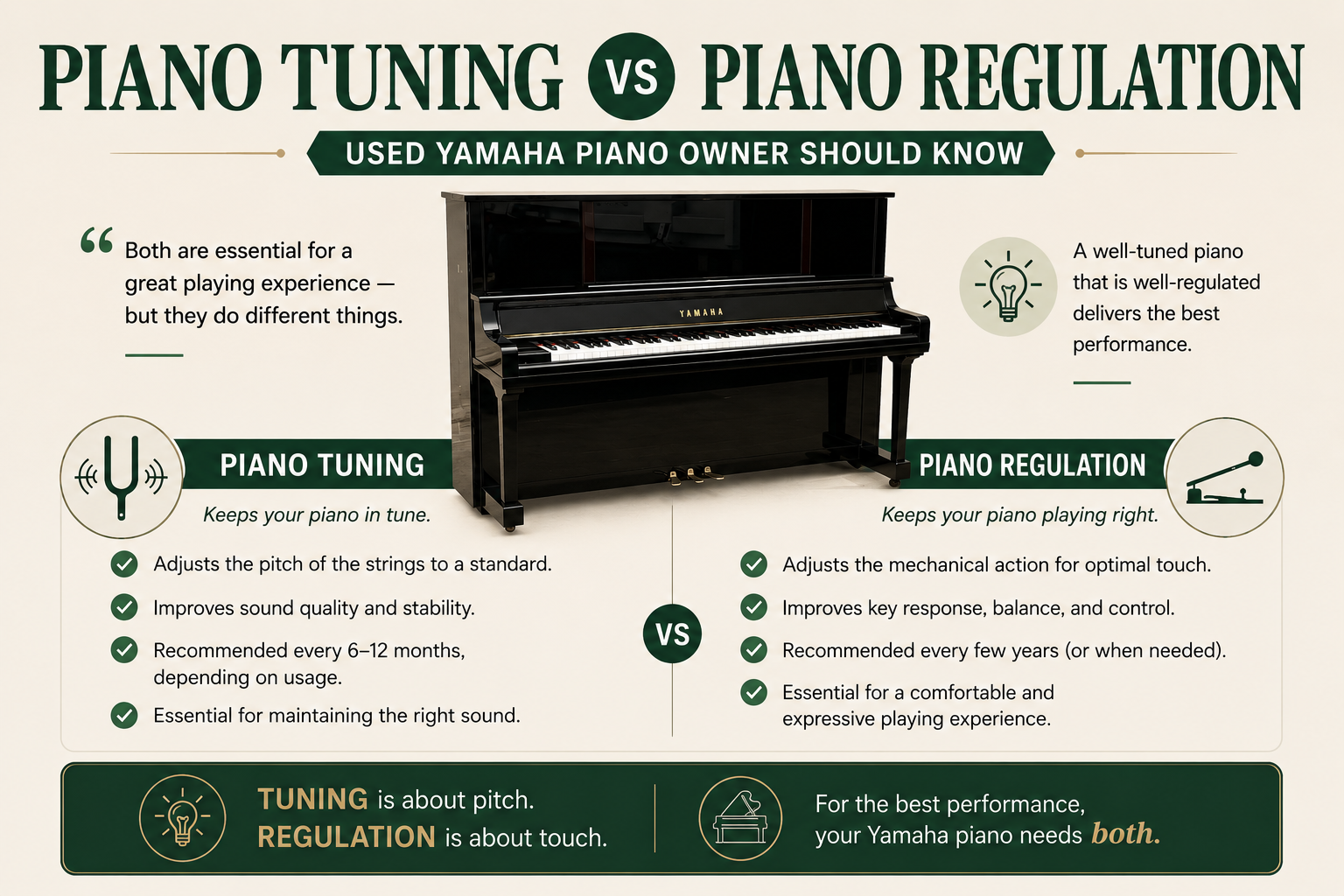
Piano tuning restores every note to the correct pitch by adjusting the tension of each string.
Humidity changes, temperature fluctuations, regular playing, and even moving the piano gradually pull the strings out of tune. This happens to every piano, regardless of brand or quality.
After purchasing a used Yamaha piano, schedule a professional tuning as soon as possible. Even if the previous owner recently tuned the instrument, transportation can alter the string tension.
Routine tuning keeps your Yamaha sounding balanced, expressive, and enjoyable to play. Most technicians recommend tuning every six to twelve months.
What Is Piano Regulation?
While tuning improves the sound, regulation improves the playing experience.
Inside every Yamaha piano, thousands of precision components work together every time you press a key. Over the years, felt compresses, moving parts shift slightly, and repeated playing changes how the action responds.
Regulation fine-tunes these components so the action performs according to Yamaha’s original specifications. The result is a keyboard that feels smoother, more even, and more responsive.
Why Your Used Yamaha Piano May Need Regulation
Many piano owners assume tuning solves every performance issue. In reality, many used Yamaha pianos receive regular tuning but go years without proper regulation.
If your piano shows any of the following signs, the action, not the tuning – is often the problem:
- Some keys feel heavier than others.
- Certain notes are difficult to play softly.
- Keys feel sticky or slow to return.
- Repeated notes respond sluggishly.
Professional regulation corrects these issues and restores a more consistent playing experience.
Why Yamaha Pianos Respond So Well to Regulation
Technicians often enjoy working on Yamaha pianos because of their precise engineering and consistent manufacturing standards.
Their high-quality action design allows technicians to make accurate adjustments that significantly improve touch and responsiveness. Even after years of use, a properly regulated used Yamaha piano can regain much of its original feel.
This durability explains why so many pianists continue to choose used Yamaha pianos over other brands.
How Often Should You Regulate a Used Yamaha Piano?
Unlike tuning, regulation follows your playing habits rather than a fixed schedule.
For example:
- A family piano may only need regulation every 8 to 10 years.
- A teacher’s piano may benefit from regulation every 4 to 6 years.
- A piano in a school or music academy may require more frequent adjustments because of heavy daily use.
Regular inspections help identify wear before it affects the piano’s performance.
Tuning Alone Doesn’t Restore Performance
Many owners notice that their used Yamaha piano still doesn’t feel quite right after a tuning. That’s because tuning corrects pitch, not touch. It won’t fix uneven key height, sluggish repetition, inconsistent hammer movement, or worn action settings.
When you combine professional tuning with regulation, your used Yamaha piano delivers better consistency, improved dynamic control, and a more enjoyable playing experience.
Final Thoughts
A used Yamaha piano offers outstanding value, exceptional reliability, and the potential to last for decades. To enjoy everything the instrument has to offer, don’t rely on tuning alone.
Regular tuning keeps the piano sounding accurate, while professional regulation keeps every key responsive and consistent. Together, these services preserve the performance and musical expression that make Yamaha one of the world’s most respected piano brands.
Whether you’re buying your first piano or upgrading to a better instrument, choose a distributor you can trust. A reputable dealer will inspect, tune, regulate, and refurbish every used Yamaha piano before delivery. In Malaysia, The Crafting Music has earned a strong reputation as a trusted distributor of quality used pianos. Their experienced technicians carefully restore every used Yamaha piano through professional tuning, regulation, repair, and refurbishment, helping each instrument perform at its best for years to come.