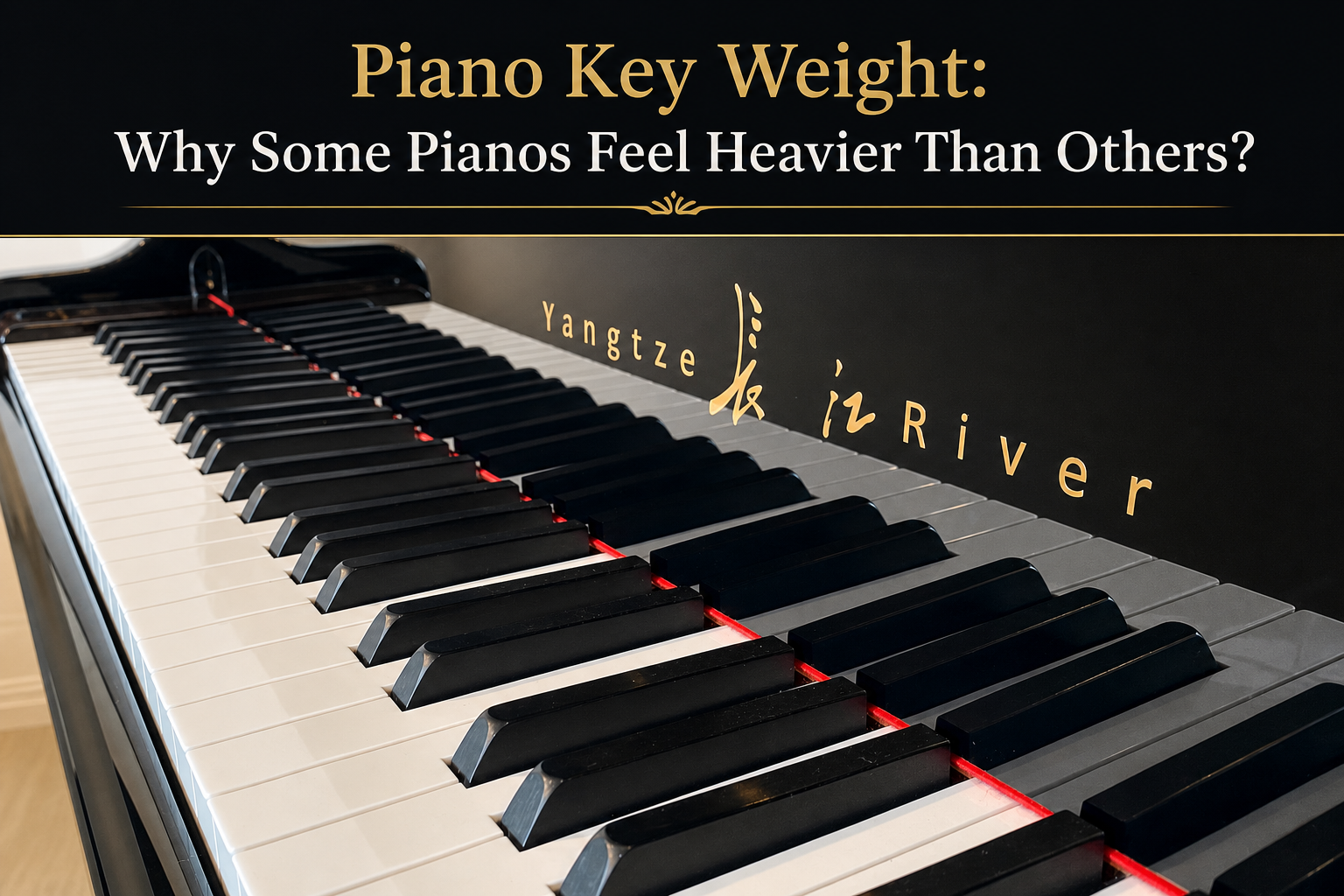
Piano Key Weight: Why Some Pianos Feel Heavier Than Others?
Have you ever played two pianos and noticed that the keys feel completely different?
On one piano, the keys may feel light and easy to play. On another, they may feel firmer and require a little more pressure. Some players prefer a lighter touch, while others enjoy the more solid feeling of a firmer keyboard.
This is often referred to as piano key weight or piano touch.
But what makes one piano feel heavier than another? And does a heavier touch mean the piano is better?
The answer is not quite that simple. The feel of a piano comes from the way its keyboard, action and hammers work together. Piano size and design can also make a difference.
Looking at different types of Yangtze River piano can help illustrate how these factors influence the playing experience. From upright pianos to professional uprights and grands, each design can offer a different touch and response.
What Is Piano Key Weight?
When people talk about piano key weight, they are usually describing how much resistance they feel when pressing a key.
Pressing a piano key sets the action in motion, which moves the hammer towards the string. The player feels the combined response of this mechanism through their fingers.
That is why two pianos can look similar but feel very different to play.
A piano with a lighter touch may feel quick and easy, while a piano with a firmer touch may feel more substantial and controlled.
There is no single touch that is right for everyone.
Why Do Some Piano Keys Feel Heavier?
Several things can affect the feel of a piano keyboard.
The Piano key’s weight balancing
During manufacturing, a proper piano factory will be balancing every 88 keys across the pianos. Leads will be placed at strategic location of every key to even out the weight of each keys. A badly done balancing might cause the piano to have uneven touch and also overweighed keys.
The Piano’s Action
The action plays an important role in how the keys respond. Its design affects how the movement of your fingers is transferred to the hammer.
Different pianos are designed with different actions, so it is completely normal for one piano to feel different from another.
The Hammers
The hammers also contribute to the overall feel of the keyboard. When you press a key, the action moves the hammer towards the string.
The way the hammer moves and the characteristics of the action influence how much resistance you feel.
The Condition of the Piano
Sometimes a piano feels heavier because it needs attention.
As a piano gets older and is played regularly, parts of the action can wear. Dust, friction and changes in the condition of felt and other components can affect how smoothly the keys move.
If one or two keys suddenly feel much heavier than the rest, that is worth having checked by a piano technician.
Yangtze River Piano: Three Examples of Different Piano Touch
Upright Piano: A Different Kind of Touch
The Yangtze River Piano YUC-121 represents the upright piano category.
An upright piano can have a light, medium or firm touch depending on its action design and regulation.
For everyday playing, a well-designed upright should feel responsive and consistent, allowing the player to control both soft and strong playing comfortably.
Professional Upright: More Than Just a Bigger Piano
The Yangtze River Piano TCH-9XLE represents the professional upright category.
A professional upright is typically taller than a standard upright, giving the piano more room for a longer string scale and a larger sound-producing structure.
However, being taller does not necessarily mean that the keys are heavier.
Its larger design can accommodate a different action and hammer arrangement, which can influence the feeling of resistance, response and control.
A well-regulated professional upright should still feel responsive and comfortable to play.
Grand Piano: Why Does It Feel Different?
The Yangtze River Piano TCH-212 represents the grand piano category.
A grand piano has a different action design from an upright piano, which gives the keyboard its distinctive touch and response. The horizontal action allows the mechanism to work differently, giving players a more direct and responsive connection with the keys.
Players may notice a particularly refined feeling when playing repeated notes, fast passages and subtle changes in dynamics. The keys can feel firm and controlled while still allowing the player to play softly, quickly and expressively.
This is why a grand piano should not simply be described as having “heavier” or “lighter” keys. Its touch is influenced by the way the entire action responds to the player.
Is a Heavier Touch Better?
Not necessarily.
Some pianists like a lighter touch because the keys feel quick and effortless. Others prefer a firmer touch because it gives them a stronger sense of control.
For beginners, a comfortable and consistent touch is often more important than choosing a piano based on whether the keys feel heavy.
For more experienced players, personal preference becomes increasingly important. A pianist who regularly performs demanding repertoire may have a clear idea of the type of touch they prefer.
The best way to find out is simple: play the piano yourself.
How Key Touch Can Change Over Time
A piano’s touch can change as the instrument gets older.
Regular playing naturally causes wear, particularly in parts of the action that move frequently. Felt can become compressed, friction can develop and adjustments may be needed.
Humidity and temperature can also affect the condition of a piano over time. This is especially worth considering in Malaysia’s warm and humid climate.
Regular servicing helps keep the keyboard and action working properly. Tuning is important, but a piano may also need regulation and other adjustments to maintain a good playing feel.
What Is Piano Regulation?
Piano regulation is essentially about getting the piano’s mechanical parts working together properly.
A technician can check the movement of the keys, action and hammers and make adjustments where necessary.
If the keyboard feels uneven, sluggish or unusually heavy in certain areas, regulation may help restore a more consistent touch.
This is one reason why two pianos of the same model and age can feel different. Their maintenance history may not be the same.
What Should You Look for When Choosing a Piano?
Whether you are comparing an upright, professional upright or grand piano, don’t judge the keyboard by pressing just one or two keys.
Sit down and play across the full keyboard.
Try scales, chords, repeated notes and softer passages. Notice how the keys feel under your fingers and whether the response remains consistent from the bass to the treble.
Look for:
- Keys that feel unusually heavy or light
- Uneven touch between neighbouring keys
- Keys that do not return smoothly
- A sluggish feeling
- Unusual mechanical noises
- Differences between the bass, middle and treble sections
If you are buying a second-hand piano, these checks are particularly important. A professional inspection can also help identify problems that may not be obvious during a short test.
Final Thoughts
Piano key weight is not about finding the heaviest or lightest keyboard.
What matters is how the piano feels when you play it.
An upright, professional upright and grand piano can each offer a different touch because of their design and action. Yangtze River piano range is a good example of how different types of pianos can provide different playing experiences, from everyday upright playing to professional grand-piano performance.
Ultimately, the right piano should feel natural under your fingers. The keys should respond smoothly, the touch should feel consistent and the instrument should give you enough control to express your music.
So when choosing a piano, don’t just ask how it sounds.
Sit down, play it and feel the difference.