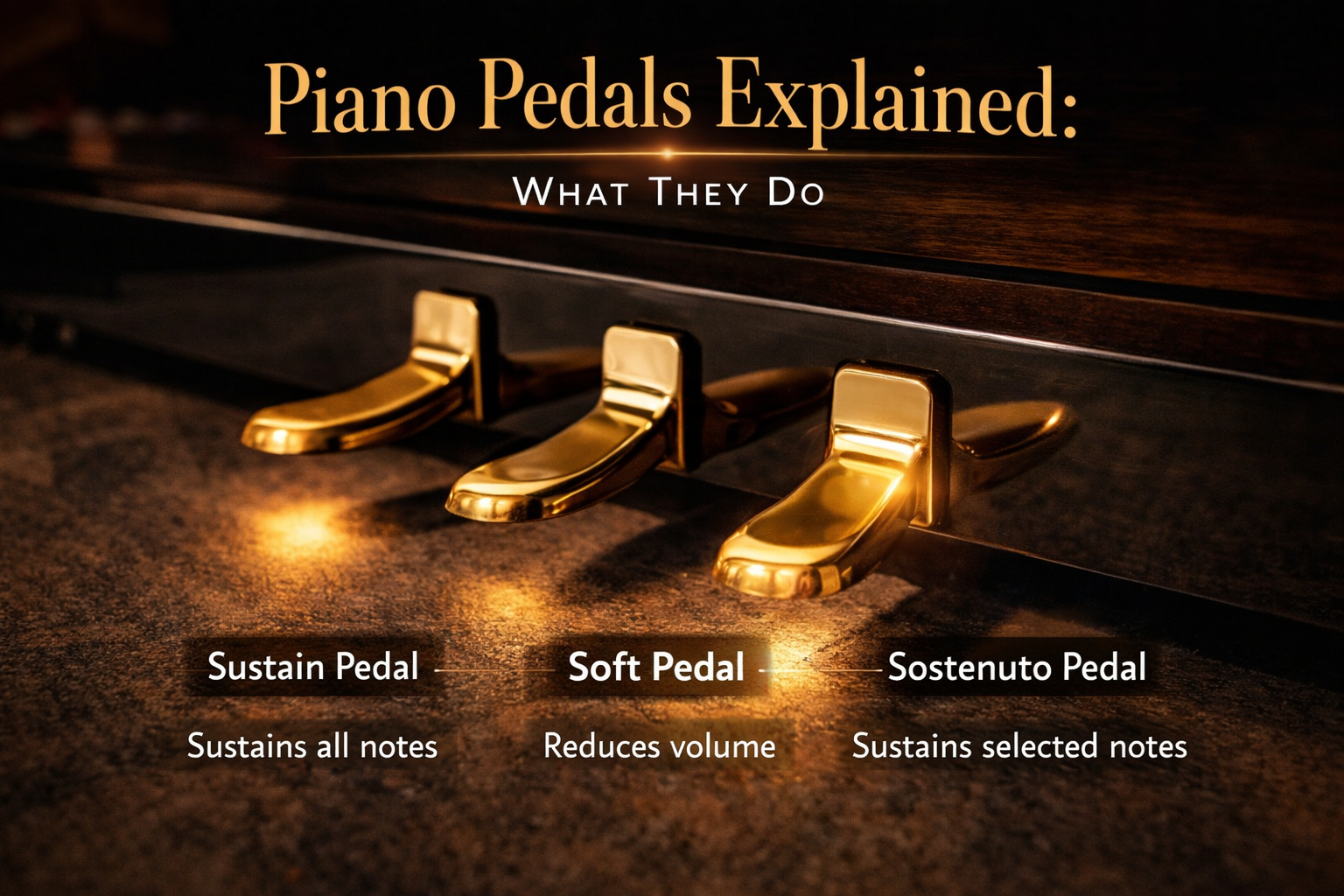
Piano Pedals Explained: What They Do
The piano is a fascinating instrument with many components that work together to create beautiful music. While most people focus on the keys, piano pedals play an equally important role in shaping the sound and expression of a performance. Whether you are a beginner or an experienced player, understanding how piano pedals work can greatly improve your playing technique.
In this guide, we will explain what piano pedals do, how each pedal works, and why they matter—especially for those exploring instruments like used Yamaha piano Malaysia musicians often look for when buying a quality piano.
What Are Piano Pedals?
Most acoustic pianos come with three pedals located at the bottom of the instrument. These pedals control different aspects of sound by interacting with the piano’s internal mechanics, such as the dampers and hammers.
The three main pedals are:
-
Sustain Pedal (Right Pedal)
-
Soft Pedal (Left Pedal)
-
Sostenuto Pedal (Middle Pedal)
Each pedal has a unique function that affects how notes are played and how long they resonate.
The Sustain Pedal (Right Pedal)
The sustain pedal is the most commonly used pedal on a piano. When pressed, it lifts all the dampers off the strings, allowing them to vibrate freely even after you release the keys.
What the Sustain Pedal Does
Normally, when you release a piano key, the damper falls back onto the string and stops the sound. When you press the sustain pedal, the dampers remain lifted, allowing notes to continue ringing.
This creates:
-
A fuller sound
-
Smooth transitions between notes
-
Rich harmonic resonance
For example, when playing slow ballads or classical pieces, the sustain pedal helps connect notes smoothly.
Many pianists practicing on a used Yamaha piano Malaysia music shops offer will notice how responsive the sustain pedal is, allowing for greater musical expression.
The Soft Pedal (Left Pedal)
The soft pedal, also known as the una corda pedal, reduces the volume of the piano and slightly changes the tone.
How the Soft Pedal Works
On a grand piano, pressing the soft pedal shifts the entire keyboard mechanism slightly so the hammer strikes fewer strings.
This produces:
-
A quieter sound
-
A softer tone
-
A more delicate musical expression
On upright pianos, the soft pedal works differently. Instead of shifting the mechanism, it moves the hammers closer to the strings, reducing the force of impact.
This pedal is useful when playing:
-
Gentle passages
-
Accompaniment sections
-
Emotional or expressive music
Many players practicing at home appreciate this feature, especially when using instruments like a used Yamaha piano Malaysia sellers provide for students and hobbyists.
The Sostenuto Pedal (Middle Pedal)
The sostenuto pedal is the least commonly used pedal but is still important for advanced playing.
What the Sostenuto Pedal Does
Unlike the sustain pedal, which lifts all dampers, the sostenuto pedal only sustains the notes that are currently being held down when the pedal is pressed.
This allows pianists to:
-
Sustain specific notes
-
Continue playing other notes normally
-
Create complex musical textures
For example, a pianist may sustain a bass note while playing a melody and harmony above it.
Although not used as frequently in beginner music, the sostenuto pedal is often found on higher-quality instruments, including many models from Yamaha that appear in the used Yamaha piano Malaysia market.
Why Pedals Are Important on Used Yamaha Piano
Piano pedals add depth, emotion, and dynamic control to music. Without them, piano playing would sound much more limited.
Pedals allow musicians to:
-
Blend notes smoothly
-
Create sustained harmonies
-
Control volume and tone
-
Add expressive nuance
In classical music, pedal technique is often essential for achieving the intended sound of the composition.
Learning Proper Pedal Technique on Used Yamaha Piano
Using piano pedals correctly takes practice. Beginners often make the mistake of holding the sustain pedal down for too long, which can create a muddy sound.
Here are a few tips for better pedal technique:
1. Change the Pedal with Chord Changes
Lift and press the sustain pedal whenever the harmony changes.
2. Use Half-Pedaling
Advanced pianists sometimes partially press the sustain pedal to control resonance more precisely.
3. Practice Slowly
Start with slow pieces to understand how pedal timing affects sound.
Practicing regularly on a well-maintained piano, such as a used Yamaha piano buyers commonly choose for reliability and tone, can help improve pedal control.
Choose Used Yamaha Piano in Malaysia with Responsive Pedals
If you are shopping for a piano, pedal responsiveness is something worth paying attention to. A well-designed pedal system allows smoother control and better musical expression.
Many pianists in Malaysia prefer Yamaha pianos because they are known for:
-
Consistent build quality
-
Balanced key action
-
Reliable pedal mechanisms
This is why the used Yamaha piano Malaysia market is popular among students, music schools, and professional players.